bruise (**브루**즈) — An injury appearing as an area of discolored skin on the body, caused by a blow or impact rupturing underlying blood vessels
Part of speech: NOUN
Definition: An injury appearing as an area of discolored skin on the body, caused by a blow or impact rupturing underlying blood vessels
Pronunciation (IPA): /bruːz/
Korean meaning: 타박상, 멍
Korean pronunciation: **브루**즈
Example Sentences
- My banana turned into a modern art masterpiece with all those colorful bruises.
- The soccer player's ego was more bruised than his shins after missing the penalty.
- She tried to cover the bruise with makeup before the important meeting.
bruise
NOUN[/bruːz/]
브루즈
An injury appearing as an area of discolored skin on the body, caused by a blow or impact rupturing underlying blood vessels
타박상, 멍
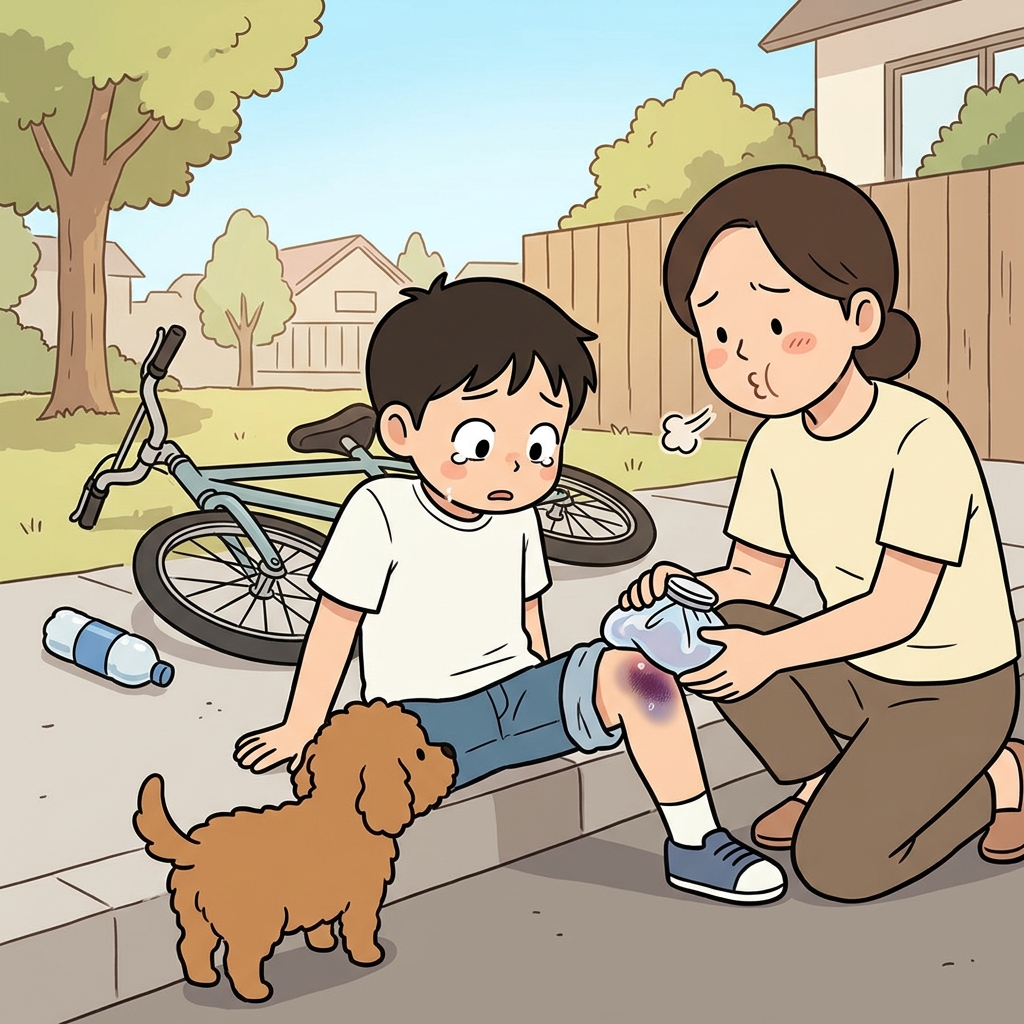
자전거에서 넘어진 뒤 무릎에 시퍼런 멍이 들었다.
🎤발음
🌳어원 분석
동일한 형태로 명사와 동사 모두 사용되는 단어
기원
고대 프랑스어 'bruisier'(부수다, 깨뜨리다)에서 유래되었으며, 게르만어족의 '부수다'라는 의미의 단어와 연결됩니다.
형태소 분해
Old French 'bruisier' → Middle English 'brusen' → Modern English 'bruise'
진화 과정
고대 프랑스어 'bruisier'(부수다, 깨뜨리다)에서 유래되었으며, 게르만어족의 '부수다'라는 의미의 단어와 연결됩니다.
💡창의적 암기법
AI Generated Mnemonic
'브루즈' 발음이 '부루퉁'과 비슷해서, 멍이 들면 얼굴이 부루퉁해진다고 연상할 수 있습니다. 또한 '브루'가 '부르르' 떨리는 소리 같아서 아픈 멍 때문에 부르르 떤다고 기억하세요.
💡 브루즈 → 부루퉁 → 멍 들어서 부루퉁
🎵라이밍 (Rhyme)
-oos 발음으로 끝나는 단어들과 함께 기억하기
-oos 발음으로 끝나는 단어들과 함께 기억하기
-oos 발음으로 끝나는 단어들과 함께 기억하기
-oos 발음으로 끝나는 단어들과 함께 기억하기
-oos 발음으로 끝나는 단어들과 함께 기억하기
🔗연어 (Collocation)
시퍼런 멍
쉽게 멍이 들다
깊은 타박상
새로 생긴 멍
상처받은 자존심
멍을 치료하다
📝예문
“My banana turned into a modern art masterpiece with all those colorful bruises.”
내 바나나는 그 화려한 멍들 때문에 현대 예술 작품이 되었다.
“The soccer player's ego was more bruised than his shins after missing the penalty.”
그 축구선수는 페널티킥을 놓친 후 정강이보다 자존심이 더 상했다.
“She tried to cover the bruise with makeup before the important meeting.”
그녀는 중요한 회의 전에 화장으로 멍을 가리려고 했다.
“The fruit vendor carefully separated the bruised apples from the fresh ones.”
과일 상인은 상한 사과들을 신선한 것들과 조심스럽게 분리했다.