bizarre (비자르) — very strange or unusual, especially in a way that is difficult to understand or explain
Part of speech: ADJECTIVE
Definition: very strange or unusual, especially in a way that is difficult to understand or explain
Pronunciation (IPA): /bɪˈzɑːr/
Korean meaning: 매우 이상하거나 특이한, 특히 이해하거나 설명하기 어려운 방식으로
Korean pronunciation: 비자르
Example Sentences
- My neighbor's bizarre habit of watering plastic flowers every morning confused everyone.
- The detective found the crime scene bizarre, with purple footprints leading to nowhere.
- It's bizarre how my cat always knows when I'm about to open a can of tuna.
bizarre
ADJECTIVE[/bɪˈzɑːr/]
비자르
very strange or unusual, especially in a way that is difficult to understand or explain
매우 이상하거나 특이한, 특히 이해하거나 설명하기 어려운 방식으로

모두는 거꾸로 지어진 기이한 집을 놀라며 바라보았다.

The magician performed a bizarre trick that left the audience speechless.
마술사는 관객들을 말문이 막히게 하는 기이한 마술을 선보였다. (바자회(Bazaar)에서 외계인 모양 램프를 샀다. 정말 Bizarre했다.)
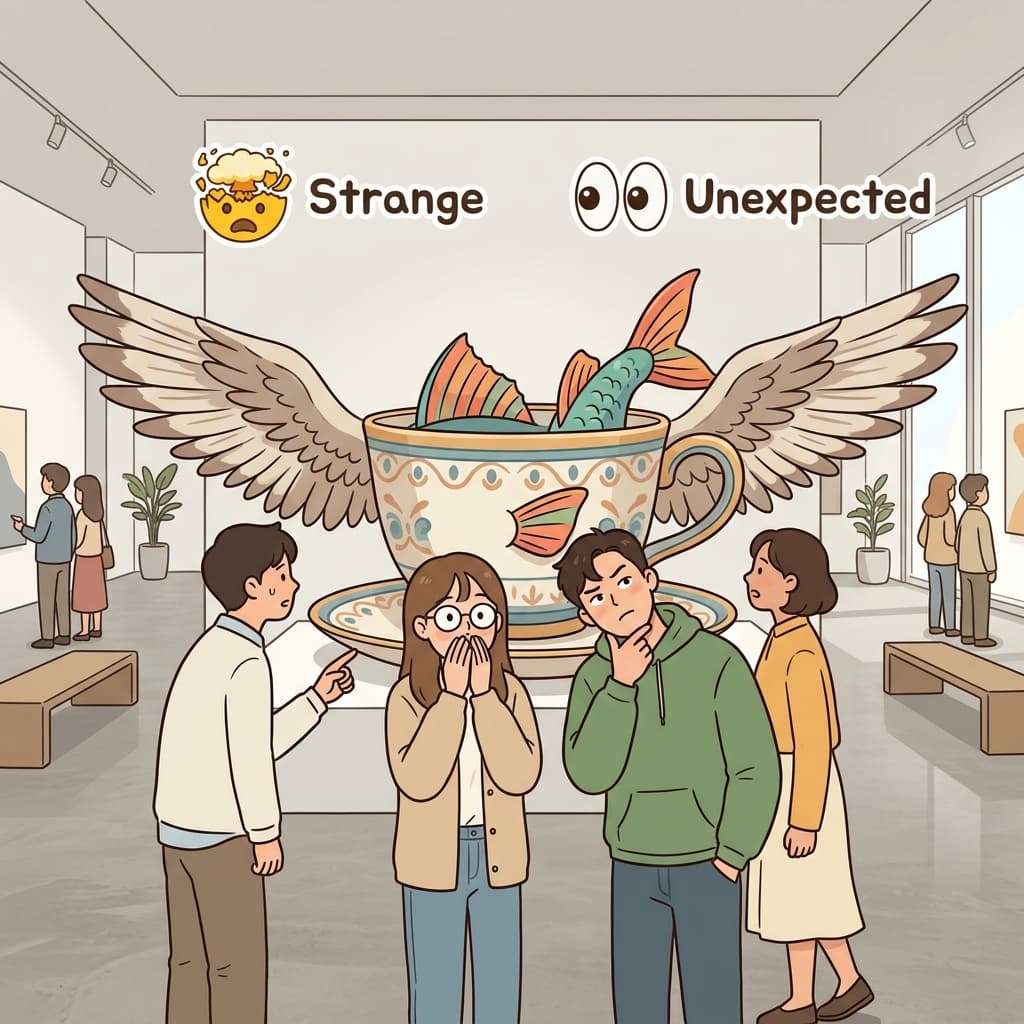
The museum displayed a bizarre sculpture unlike anything we had seen before.
박물관에는 이전에 본 적 없는 기이한 조각상이 전시되어 있었다.

The bizarre guitarist became a superstar because of his unforgettable style.
기이한 퍼포먼스를 펼친 기타리스트는 독특한 스타일 덕분에 슈퍼스타가 되었다.
🎤발음
🌳어원 분석
단일 어근으로 구성된 단어로, 접두사나 접미사가 없는 형태
기원
16세기 프랑스어 'bizarre'에서 유래되었으며, 원래는 '이상한, 기괴한'이라는 뜻이었습니다. 더 거슬러 올라가면 스페인어 'bizarro(용감한, 잘생긴)'에서 왔는데, 아이러니하게도 현재의 '이상한'이라는 의미와는 정반대입니다.
형태소 분해
French 'bizarre' → English 'bizarre'
진화 과정
16세기 프랑스어 'bizarre'에서 유래되었으며, 원래는 '이상한, 기괴한'이라는 뜻이었습니다. 더 거슬러 올라가면 스페인어 'bizarro(용감한, 잘생긴)'에서 왔는데, 아이러니하게도 현재의 '이상한'이라는 의미와는 정반대입니다.
💡창의적 암기법
AI Generated Mnemonic
'비자르'는 '비자(visa)를 르르 찢어버리는' 상황을 연상해보세요. 누군가 여권의 비자를 갑자기 찢어버린다면 정말 기괴하고 이상한 행동이겠죠?
💡 비자 르르 찢기 = 기괴한 행동
🎵라이밍 (Rhyme)
'-ar' 음으로 끝나는 단어들과 함께 기억하면 발음 연습에 도움
'-ar' 음으로 끝나는 단어들과 함께 기억하면 발음 연습에 도움
'-ar' 음으로 끝나는 단어들과 함께 기억하면 발음 연습에 도움
'-ar' 음으로 끝나는 단어들과 함께 기억하면 발음 연습에 도움
🔗연어 (Collocation)
기괴한 행동
이상한 사건
기묘한 우연
기괴한 외모
이상해 보이다
이상하게 들리다
📝예문
“My neighbor's bizarre habit of watering plastic flowers every morning confused everyone.”
이웃의 매일 아침 플라스틱 꽃에 물을 주는 기괴한 습관은 모든 사람을 당황시켰다.
“The detective found the crime scene bizarre, with purple footprints leading to nowhere.”
형사는 아무 곳으로도 이어지지 않는 보라색 발자국이 있는 범죄 현장이 기괴하다고 생각했다.
“It's bizarre how my cat always knows when I'm about to open a can of tuna.”
내가 참치캔을 열려고 할 때를 우리 고양이가 항상 아는 것이 정말 신기하다.
“The restaurant's bizarre menu included ice cream soup and chocolate pizza.”
그 레스토랑의 기괴한 메뉴에는 아이스크림 수프와 초콜릿 피자가 포함되어 있었다.