cognate (카그네이트) — related in origin, especially descended from the same ancestral language
Part of speech: ADJECTIVE
Definition: related in origin, especially descended from the same ancestral language
Pronunciation (IPA): /ˈkɒɡ.neɪt/
Korean meaning: 같은 어원(조상)을 가진, 동족(동원)의
Korean pronunciation: 카그네이트
Example Sentences
- Because Spanish and English share Latin roots, words like 'hospital' are cognates—Spanish learners basically get free vocabulary!
- My linguistics teacher got way too excited explaining that 'mother' and the Korean-borrowed word have no cognate relationship at all.
- The word 'father' in English is cognate with 'Vater' in German and 'pater' in Latin.
cognate
ADJECTIVE[/ˈkɒɡ.neɪt/]
카그네이트
related in origin, especially descended from the same ancestral language
같은 어원(조상)을 가진, 동족(동원)의
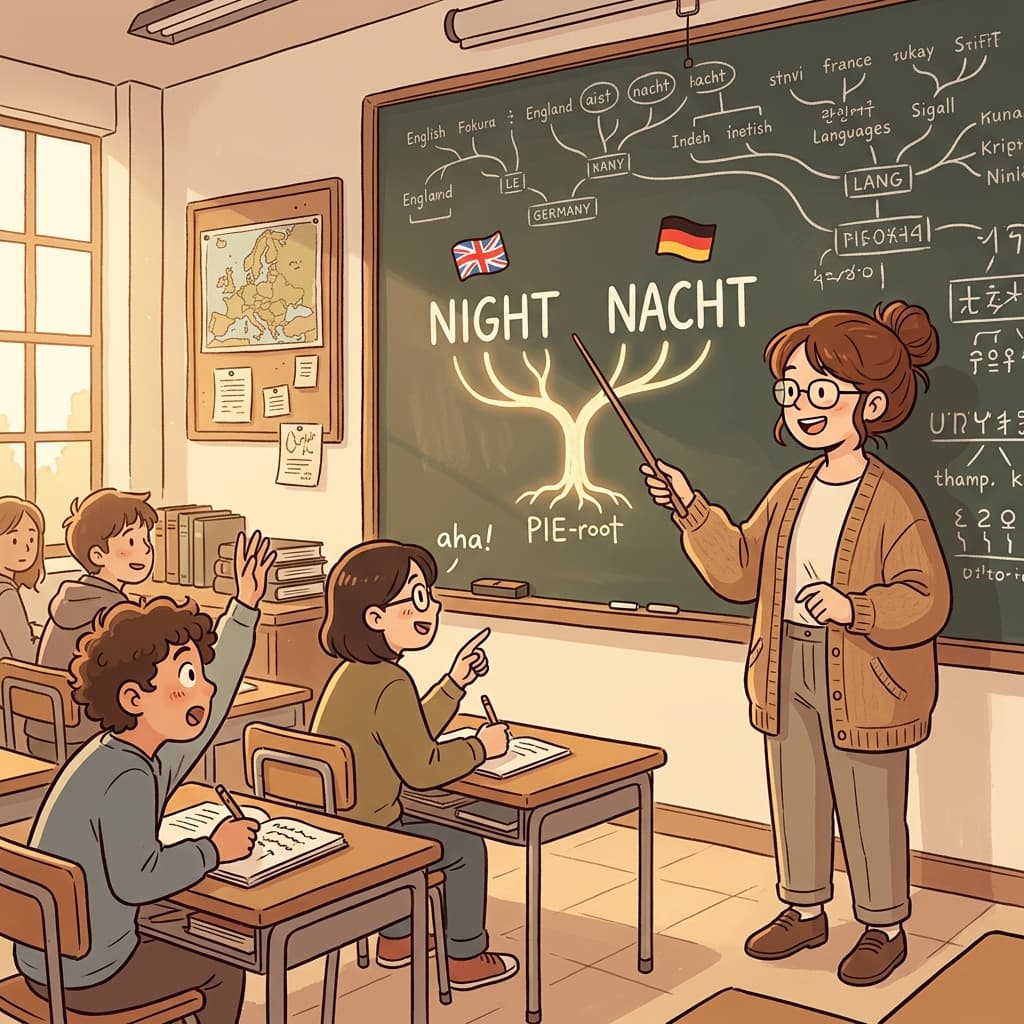
영어 'night'랑 독일어 'Nacht'는 뿌리가 같은 단어야.
🎤발음
🌳어원 분석
'co-(함께)'와 '태어난(gnat)'이 합쳐져 '같은 근원에서 함께 태어난' → '동족의, 같은 어원의'라는 뜻이 되었습니다.
기원
라틴어 'cognatus'에서 유래했으며, 이는 'co-'(함께)와 'gnatus'(태어난, gnasci=태어나다에서 파생)가 합쳐진 말입니다. 즉 '함께 태어난'이라는 뜻에서 '같은 조상을 가진, 혈연관계인'이라는 의미로 발전했고, 언어학에서는 '같은 어원을 가진 단어'라는 뜻으로 쓰이게 되었습니다.
형태소 분해
co- (함께) + gnatus (태어난, gnasci=태어나다)
진화 과정
라틴어 'cognatus'에서 유래했으며, 이는 'co-'(함께)와 'gnatus'(태어난, gnasci=태어나다에서 파생)가 합쳐진 말입니다. 즉 '함께 태어난'이라는 뜻에서 '같은 조상을 가진, 혈연관계인'이라는 의미로 발전했고, 언어학에서는 '같은 어원을 가진 단어'라는 뜻으로 쓰이게 되었습니다.
💡창의적 암기법
AI Generated Mnemonic
'카그네이트[cognate]'를 '코(nose) + 그(그가) + 네이트(Nate)'로 나눠보세요. 네이트라는 사람의 코가 아빠 코랑 똑같이 생겼어요! 왜냐면 같은 조상(같은 어원)에서 '함께 태어났기(co+gnat)' 때문이죠. 그래서 'cognate'는 '코가 닮은 친척 = 같은 어원을 가진 단어/동족'이라는 뜻이 됩니다.
💡 코 닮은 네이트 = 같은 조상에서 태어난 동족어(cognate)
🎵라이밍 (Rhyme)
'cognate'는 'gate(문)', 'mate(짝)'와 라임이 맞습니다. '문(gate) 너머 같은 짝(mate)에서 태어났다' 이미지로 기억하면 라임과 뜻을 동시에 잡을 수 있어요.
'cognate'는 'gate(문)', 'mate(짝)'와 라임이 맞습니다. '문(gate) 너머 같은 짝(mate)에서 태어났다' 이미지로 기억하면 라임과 뜻을 동시에 잡을 수 있어요.
'cognate'는 'gate(문)', 'mate(짝)'와 라임이 맞습니다. '문(gate) 너머 같은 짝(mate)에서 태어났다' 이미지로 기억하면 라임과 뜻을 동시에 잡을 수 있어요.
'cognate'는 'gate(문)', 'mate(짝)'와 라임이 맞습니다. '문(gate) 너머 같은 짝(mate)에서 태어났다' 이미지로 기억하면 라임과 뜻을 동시에 잡을 수 있어요.
'cognate'는 'gate(문)', 'mate(짝)'와 라임이 맞습니다. '문(gate) 너머 같은 짝(mate)에서 태어났다' 이미지로 기억하면 라임과 뜻을 동시에 잡을 수 있어요.
🔗연어 (Collocation)
동원어 쌍
동원어
동족 언어
~와 동원 관계인
진짜 동원어
거짓 동원어(가짜 동족어)
언어학적으로 동원인
📝예문
“Because Spanish and English share Latin roots, words like 'hospital' are cognates—Spanish learners basically get free vocabulary!”
스페인어와 영어는 라틴어 어원을 공유하기 때문에 'hospital' 같은 단어는 동원어라서, 스페인어 학습자들은 사실상 공짜 단어를 얻는 셈이다!
“My linguistics teacher got way too excited explaining that 'mother' and the Korean-borrowed word have no cognate relationship at all.”
우리 언어학 선생님은 'mother'와 한국어 차용어가 전혀 동원 관계가 없다는 걸 설명하면서 지나치게 흥분하셨다.
“The word 'father' in English is cognate with 'Vater' in German and 'pater' in Latin.”
영어의 'father'는 독일어의 'Vater', 라틴어의 'pater'와 동원어이다.
“Watch out for false cognates—Spanish 'embarazada' looks like 'embarrassed' but actually means 'pregnant'!”
거짓 동원어를 조심하세요—스페인어 'embarazada'는 'embarrassed'처럼 보이지만 실제로는 '임신한'이라는 뜻이다!
“Learning cognate words is one of the fastest ways to expand your vocabulary in a related language.”
동원어를 배우는 것은 관련 언어에서 어휘를 빠르게 늘리는 방법 중 하나이다.