neolithic (니오리틱) — relating to the later part of the Stone Age, when ground or polished stone weapons and implements prevailed
Part of speech: ADJECTIVE
Definition: relating to the later part of the Stone Age, when ground or polished stone weapons and implements prevailed
Pronunciation (IPA): /ˌniːoʊˈlɪθɪk/
Korean meaning: 신석기 시대의, 새로운 석기 시대의
Korean pronunciation: 니오리틱
Example Sentences
- My grandmother's cooking skills are so basic, I think she's still living in the neolithic period!
- The neolithic farmers developed sophisticated irrigation systems for their crops.
- Archaeologists discovered neolithic pottery fragments dating back 8,000 years.
neolithic
ADJECTIVE[/ˌniːoʊˈlɪθɪk/]
니오리틱
relating to the later part of the Stone Age, when ground or polished stone weapons and implements prevailed
신석기 시대의, 새로운 석기 시대의

신석기 마을 사람들이 곡식을 갈고 토기를 빚고 있다.
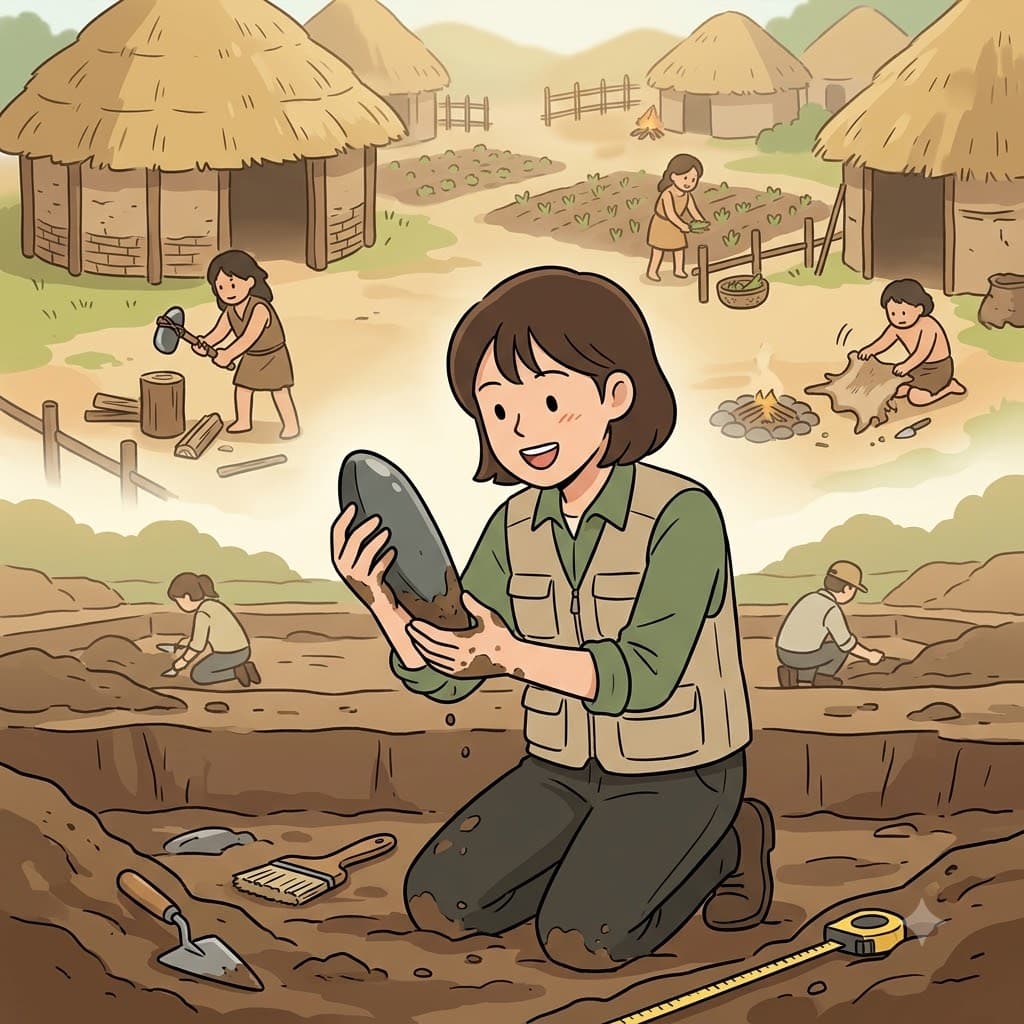
The archaeologist discovered polished stone tools from the Neolithic period in the ancient settlement.
고고학자는 고대 정착지에서 신석기 시대(neolithic)의 간석기를 발견했다. (NEO(new) + LITHIC(stone) → 새로운 돌의 시대 → 간석기를 사용한 신석기 시대 → neolithic(신석기 시대의))

The museum display explained how Neolithic people used new stone tools and built permanent settlements. (Break it into: NEO + LITHIC → NEO = new, LITHIC = stone)
박물관 전시는 신석기 시대(neolithic) 사람들이 새로운 돌도구를 사용하고 영구적인 정착지를 만들었다고 설명했다.

The Neolithic village used lithic tools, while a monolithic stone stood beside the settlement.
신석기 시대(neolithic) 마을에서는 석기(lithic)를 사용했고, 거대한 하나의 돌(monolithic)이 정착지 옆에 서 있었다.
🎤발음
🌳어원 분석
그리스어 어원의 전형적인 학술 용어 구조
기원
그리스어에서 온 단어로, 'neo(새로운)'와 'lithos(돌)'가 합쳐져서 '새로운 돌의 시대'를 의미하게 되었습니다. 19세기 고고학자들이 구석기와 구별하기 위해 만든 용어입니다.
형태소 분해
neo(새로운) + lithic(돌의)
진화 과정
그리스어에서 온 단어로, 'neo(새로운)'와 'lithos(돌)'가 합쳐져서 '새로운 돌의 시대'를 의미하게 되었습니다. 19세기 고고학자들이 구석기와 구별하기 위해 만든 용어입니다.
💡창의적 암기법
AI Generated Mnemonic
네오! 리틱틱! 새 돌 깎는 소리
💡 네오! 리틱틱! 새 돌 깎는 소리
🎵라이밍 (Rhyme)
-ic으로 끝나는 학술 용어들과 함께 기억
-ic으로 끝나는 학술 용어들과 함께 기억
-ic으로 끝나는 학술 용어들과 함께 기억
🔗연어 (Collocation)
신석기 시대
신석기 혁명
신석기 도구
신석기 정착지
신석기 문화
신석기 유적지
📝예문
“My grandmother's cooking skills are so basic, I think she's still living in the neolithic period!”
할머니의 요리 실력은 너무 기초적이라서, 아직도 신석기 시대에 사는 것 같아!
“The neolithic farmers developed sophisticated irrigation systems for their crops.”
신석기 시대 농민들은 작물을 위해 정교한 관개 시스템을 개발했다.
“Archaeologists discovered neolithic pottery fragments dating back 8,000 years.”
고고학자들은 8,000년 전으로 거슬러 올라가는 신석기 시대 토기 조각들을 발견했다.
“The transition from paleolithic to neolithic marked humanity's shift from hunting to farming.”
구석기에서 신석기로의 전환은 인류가 수렵에서 농업으로 바뀐 것을 의미한다.