challenge (챌-린지) — A task or situation that tests someone's abilities; something difficult that requires effort to overcome
Part of speech: NOUN
Definition: A task or situation that tests someone's abilities; something difficult that requires effort to overcome
Pronunciation (IPA): /ˈtʃælɪndʒ/
Korean meaning: 누군가의 능력을 시험하는 과제나 상황; 극복하기 위해 노력이 필요한 어려운 것
Korean pronunciation: 챌-린지
Example Sentences
- My biggest challenge in Korea? Using chopsticks to eat slippery noodles without looking like I'm conducting an orchestra!
- The student challenged the teacher's explanation, asking for more evidence.
- Every morning, I challenge myself to wake up before my alarm – and lose spectacularly every single day.
challenge
NOUN[/ˈtʃælɪndʒ/]
챌-린지 (강세: 챌)
A task or situation that tests someone's abilities; something difficult that requires effort to overcome
누군가의 능력을 시험하는 과제나 상황; 극복하기 위해 노력이 필요한 어려운 것

어려운 도전에 맞서다

She smiled because every challenge felt like a chance to grow stronger.
그녀는 모든 도전이 더 강해질 기회처럼 느껴져 웃었다. (챌린지 → “잘~ 해낼지 시험하는 느낌”)

The difficult challenge pushed students to think creatively. (CHANGE + TEST = CHALLENGE → a challenge tests whether someone can change, grow, or overcome difficulty)
그 어려운 도전은 학생들이 창의적으로 생각하도록 만들었다.
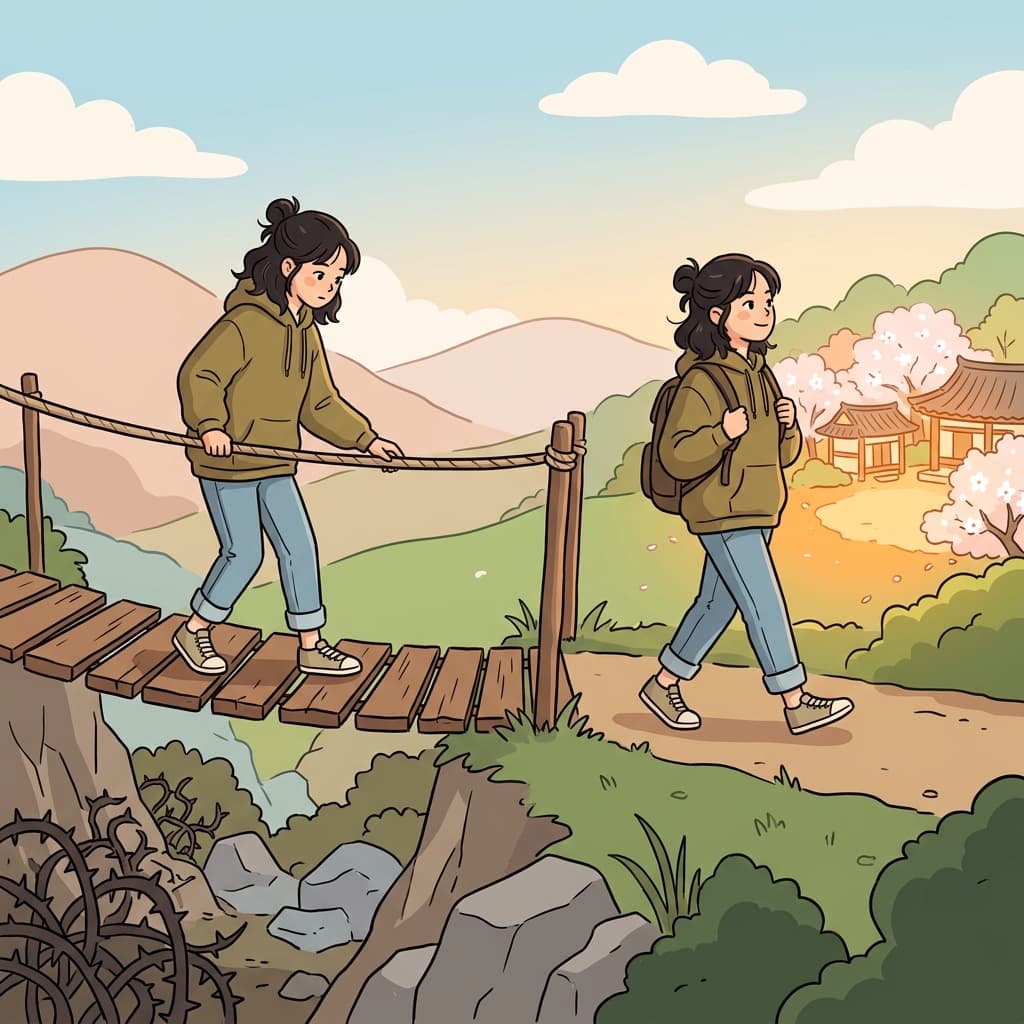
Every challenge required balance and helped them advance forward.
모든 도전은 균형을 필요로 했고 그들을 앞으로 나아가게 했다.
🎤발음
🌳어원 분석
명사형과 동사형이 같은 형태를 가지며, challenging(형용사), challenger(명사) 등으로 파생됩니다.
기원
13세기 프랑스어 'chalenge'에서 유래되었으며, 원래는 라틴어 'calumnia'(거짓 고발)에서 파생된 단어입니다. 중세 시대에는 법정에서의 이의제기나 결투 신청의 의미로 사용되었습니다.
형태소 분해
Old French 'chalenge' → Latin 'calumnia' (false accusation)
진화 과정
13세기 프랑스어 'chalenge'에서 유래되었으며, 원래는 라틴어 'calumnia'(거짓 고발)에서 파생된 단어입니다. 중세 시대에는 법정에서의 이의제기나 결투 신청의 의미로 사용되었습니다.
💡창의적 암기법
AI Generated Mnemonic
챌린지(Challenge)는 '챌린'이가 '지'게 되지 않으려고 하는 것! 챌린이(초보자)가 포기하지 않고 계속 도전하는 모습을 상상해보세요.
💡 '챌린지' 발음 그대로 - 요즘 유행하는 '챌린지'가 바로 이 단어입니다. SNS에서 하는 각종 챌린지를 떠올리면 쉽게 기억됩니다.
🎵라이밍 (Rhyme)
완전한 라이밍은 어렵지만, '-ange' 음으로 끝나는 단어들과 유사한 운율을 만들 수 있습니다. 'Challenge yourself to arrange'처럼 문장에서 활용해보세요.
완전한 라이밍은 어렵지만, '-ange' 음으로 끝나는 단어들과 유사한 운율을 만들 수 있습니다. 'Challenge yourself to arrange'처럼 문장에서 활용해보세요.
완전한 라이밍은 어렵지만, '-ange' 음으로 끝나는 단어들과 유사한 운율을 만들 수 있습니다. 'Challenge yourself to arrange'처럼 문장에서 활용해보세요.
완전한 라이밍은 어렵지만, '-ange' 음으로 끝나는 단어들과 유사한 운율을 만들 수 있습니다. 'Challenge yourself to arrange'처럼 문장에서 활용해보세요.
완전한 라이밍은 어렵지만, '-ange' 음으로 끝나는 단어들과 유사한 운율을 만들 수 있습니다. 'Challenge yourself to arrange'처럼 문장에서 활용해보세요.
🔗연어 (Collocation)
“Students face many challenges during exam period.”
학생들은 시험 기간 동안 많은 도전에 직면한다.
도전에 직면하다
“He accepted the challenge to climb the mountain.”
그는 산을 오르는 도전을 받아들였다.
도전을 받아들이다
“Climate change is a major challenge for humanity.”
기후 변화는 인류의 큰 도전이다.
큰 도전
“Young people often challenge authority.”
젊은이들은 종종 권위에 도전한다.
권위에 도전하다
“She always rises to the challenge when things get tough.”
그녀는 상황이 어려워질 때 항상 도전에 맞선다.
도전에 맞서다
📝예문
“My biggest challenge in Korea? Using chopsticks to eat slippery noodles without looking like I'm conducting an orchestra!”
한국에서 내가 겪는 가장 큰 도전? 마치 오케스트라 지휘하는 것처럼 보이지 않으면서 젓가락으로 미끄러운 면을 먹는 것!
“The student challenged the teacher's explanation, asking for more evidence.”
학생은 선생님의 설명에 이의를 제기하며 더 많은 증거를 요구했다.
“Every morning, I challenge myself to wake up before my alarm – and lose spectacularly every single day.”
매일 아침 나는 알람보다 먼저 일어나는 도전을 하지만, 매일 처참하게 실패한다.
“The new policy challenges traditional approaches to education.”
새로운 정책은 전통적인 교육 방식에 도전한다.