hail (헤일) — small balls of ice that fall like rain
Part of speech: NOUN
Definition: small balls of ice that fall like rain
Pronunciation (IPA): /heɪl/
Korean meaning: 우박
Korean pronunciation: 헤일
Example Sentences
- The weather forecast warned of golf ball-sized hail that could dent cars and break windows.
- He tried to hail a cab for 20 minutes, but they all ignored his desperate waving.
- The new restaurant is hailed as the best Korean BBQ place in town.
hail
NOUN[/heɪl/]
헤일 (강세: 헤일)
small balls of ice that fall like rain
우박
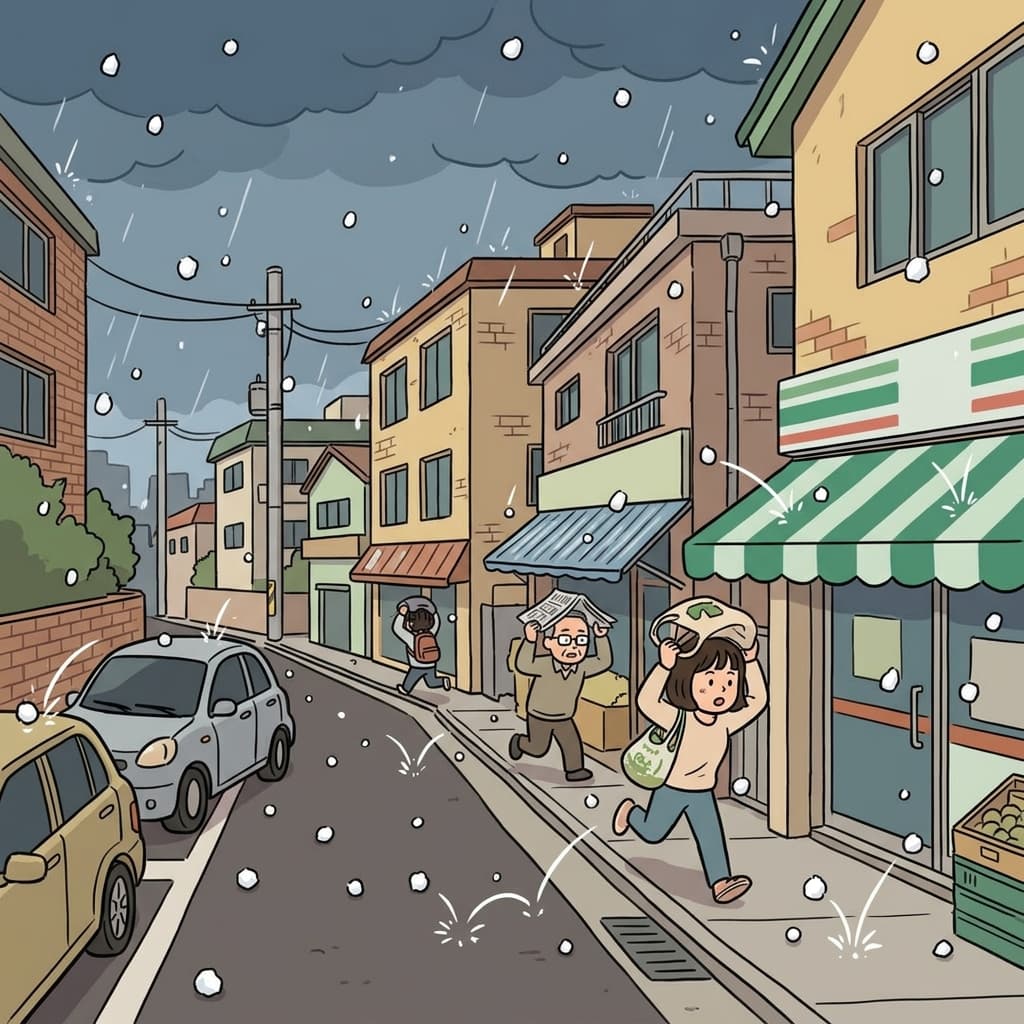
우박이 떨어지고 있어요

"Hail! Hooray!" the crowd cheered as they hailed the firefighter as a true hero.
군중은 "헤일! 허레이!"를 외치며 소방관을 진정한 영웅이라고 칭송했다. ("헤일! 허레이!" → 모두 함께 환호하며 영웅을 칭송한다)

The scientist was hailed as the greatest inventor of the century after the breakthrough. ("Hooray! Hail the hero!" → Everyone shouted "Hooray!" and hailed the scientist as a genius.)
그 과학자는 획기적인 발견 이후 세기의 가장 위대한 발명가라고 칭송받았다(hailed as).

Although she hails from a small village, she became a famous scientist.
그녀는 작은 시골 마을 출신(hails from)이지만 유명한 과학자가 되었다.
🎤발음
🌳어원 분석
단일 어근으로 구성된 단어
기원
고대 영어 'hægl'에서 유래하여 얼음덩어리를 의미했고, 인사말 의미는 'hail'(건강하라)라는 고대 인사말에서 발전했습니다.
형태소 분해
hægl (ice) + hail (greeting)
진화 과정
고대 영어 'hægl'에서 유래하여 얼음덩어리를 의미했고, 인사말 의미는 'hail'(건강하라)라는 고대 인사말에서 발전했습니다.
💡창의적 암기법
AI Generated Mnemonic
헤일[hail]은 '헤! 일어나!'라고 외치며 우박이 떨어져서 사람들을 부르는 상황을 연상해보세요. 하늘에서 '헤이!' 하고 부르니까 우박도 내리고, 택시도 부르게 됩니다.
💡 헤일 = 헤! 일어나! → 부르다/우박
🎵라이밍 (Rhyme)
-ail 패턴으로 운율 맞추기 쉬움
-ail 패턴으로 운율 맞추기 쉬움
-ail 패턴으로 운율 맞추기 쉬움
-ail 패턴으로 운율 맞추기 쉬움
-ail 패턴으로 운율 맞추기 쉬움
🔗연어 (Collocation)
택시를 잡다
~출신이다
총알세례
우박폭풍
~라고 찬양하다
심한 우박
📝예문
“The weather forecast warned of golf ball-sized hail that could dent cars and break windows.”
일기예보에서 자동차를 찌그러뜨리고 창문을 깰 수 있는 골프공 크기의 우박이 내릴 것이라고 경고했다.
“He tried to hail a cab for 20 minutes, but they all ignored his desperate waving.”
그는 20분 동안 택시를 잡으려 했지만, 모든 택시가 그의 필사적인 손짓을 무시했다.
“The new restaurant is hailed as the best Korean BBQ place in town.”
그 새 식당은 시내 최고의 한국 바베큐집으로 찬사를 받고 있다.
“I hail from a small village where everyone knows your business before you do.”
나는 당신보다 먼저 당신의 일을 모든 사람이 아는 작은 마을 출신이다.