farce (파스) — a comic dramatic work using buffoonery and horseplay and typically including crude characterization and ludicrously improbable situations
Part of speech: NOUN
Definition: a comic dramatic work using buffoonery and horseplay and typically including crude characterization and ludicrously improbable situations
Pronunciation (IPA): /fɑːrs/
Korean meaning: 우스꽝스럽고 터무니없는 상황을 다룬 희극; 웃기는 상황, 허울뿐인 일
Korean pronunciation: 파스
Example Sentences
- The meeting turned into a farce when everyone started arguing about the coffee brand.
- His attempt at cooking dinner was such a farce that we ordered pizza instead.
- The election was widely regarded as a farce due to irregularities.
farce
NOUN[/fɑːrs/]
파스 (강세: 파스)
a comic dramatic work using buffoonery and horseplay and typically including crude characterization and ludicrously improbable situations
우스꽝스럽고 터무니없는 상황을 다룬 희극; 웃기는 상황, 허울뿐인 일

관객들은 모든 오해가 점점 더 황당해지는 익살극(farce)을 보며 계속 웃었다.

"봐라스!" the director laughed as the actors turned a simple play into a hilarious farce.
감독은 배우들이 평범한 연극을 웃음이 끊이지 않는 익살극(farce)으로 만들자 "봐라스!"라며 웃었다.

The trial became a farce after every witness contradicted the previous one. (farce → "False!" → Every witness cried, "False!" until the trial became a farce.)
모든 증인이 앞선 증언을 뒤집으면서 재판은 터무니없는 일(farce)이 되어 버렸다.
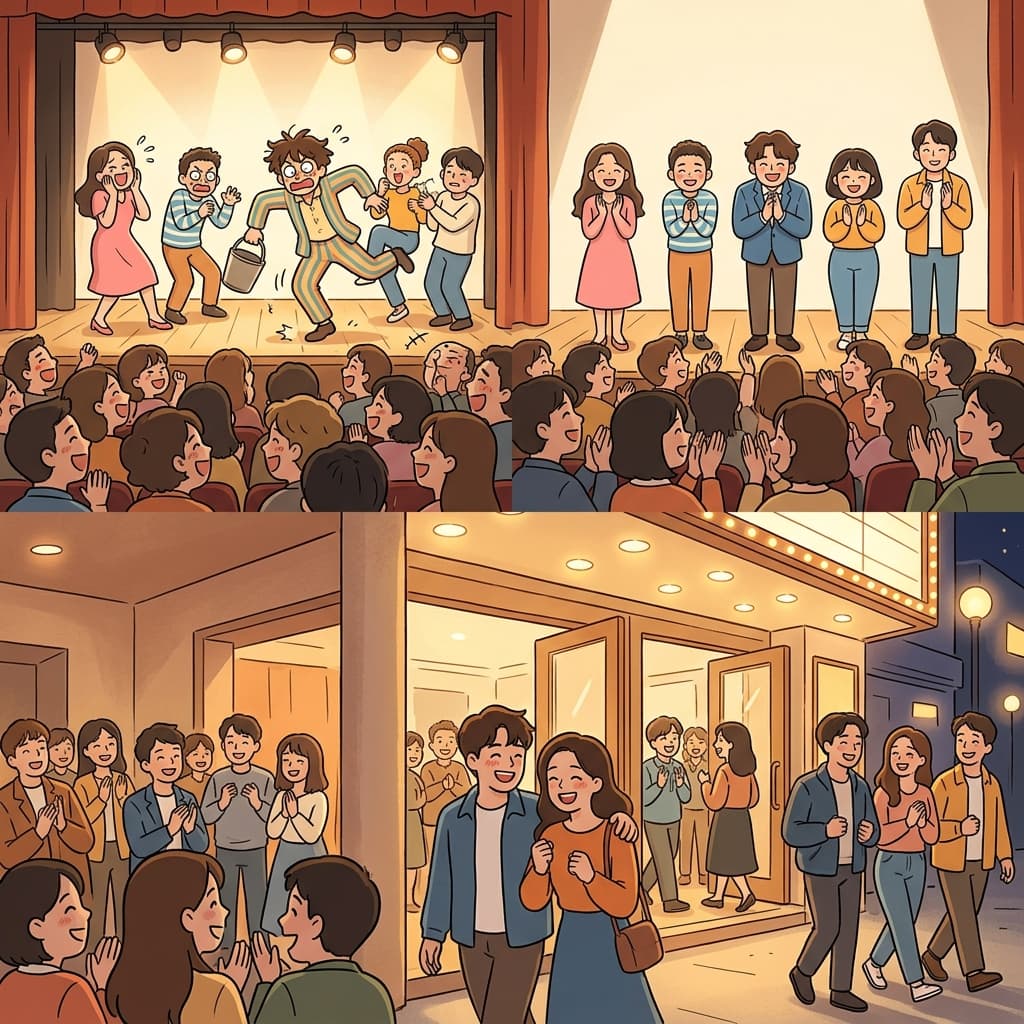
The hilarious farce made its actors stars, and the audience kept laughing all the way to their cars.
그 익살극(farce)은 배우들을 스타(stars)로 만들었고, 관객들은 주차장으로 향하는 길(cars)에서도 계속 웃음을 터뜨렸다.
🎤발음
🌳어원 분석
단순어로 형태소 분석이 어려움
기원
14세기 프랑스어 'farce'에서 유래했는데, 원래는 '속을 채우다'라는 의미의 요리 용어였습니다. 연극에서 진지한 종교 드라마 사이사이에 코믹한 장면을 '채워 넣던' 것에서 희극이라는 의미로 발전했어요.
형태소 분해
farce (to stuff, to fill) → theatrical comedy
진화 과정
14세기 프랑스어 'farce'에서 유래했는데, 원래는 '속을 채우다'라는 의미의 요리 용어였습니다. 연극에서 진지한 종교 드라마 사이사이에 코믹한 장면을 '채워 넣던' 것에서 희극이라는 의미로 발전했어요.
💡창의적 암기법
AI Generated Mnemonic
'파스'처럼 발음되는데, 근육통에 붙이는 파스처럼 '가짜로 붙여놓은' 것이 바로 farce입니다. 진짜가 아닌 우스꽝스러운 상황을 의미해요.
💡 파스 → 가짜로 붙인 → 허울뿐인 웃음거리
🎵라이밍 (Rhyme)
파스처럼 발음되는 단어들과 함께 기억하세요
파스처럼 발음되는 단어들과 함께 기억하세요
🔗연어 (Collocation)
완전한 웃음거리
정치적 희극
웃음거리로 전락하다
침실 희극 (성인 코미디)
~을 웃음거리로 만들다
📝예문
“The meeting turned into a farce when everyone started arguing about the coffee brand.”
모든 사람이 커피 브랜드에 대해 논쟁을 시작하면서 회의는 웃음거리로 전락했다.
“His attempt at cooking dinner was such a farce that we ordered pizza instead.”
그의 저녁 요리 시도는 너무나 우스꽝스러워서 우리는 대신 피자를 주문했다.
“The election was widely regarded as a farce due to irregularities.”
그 선거는 부정행위로 인해 널리 웃음거리로 여겨졌다.
“What started as a serious debate became a farce when the microphone broke.”
진지한 토론으로 시작된 것이 마이크가 고장나면서 웃음거리가 되었다.