mother tongue (마더 텅) — the first language that a person learns as a child, usually spoken at home
Part of speech: NOUN
Definition: the first language that a person learns as a child, usually spoken at home
Pronunciation (IPA): /ˈmʌðər tʌŋ/
Korean meaning: 모국어, 태어나서 처음 배운 언어
Korean pronunciation: 마더 텅
Example Sentences
- Even after living in the US for 20 years, he still counts numbers in his mother tongue when he's nervous.
- Public officials should be able to communicate policies clearly in citizens' mother tongue.
- My grandmother's mother tongue was a regional dialect that almost no young people speak anymore.
mother tongue
NOUN[/ˈmʌðər tʌŋ/]
마더 텅
the first language that a person learns as a child, usually spoken at home
모국어, 태어나서 처음 배운 언어
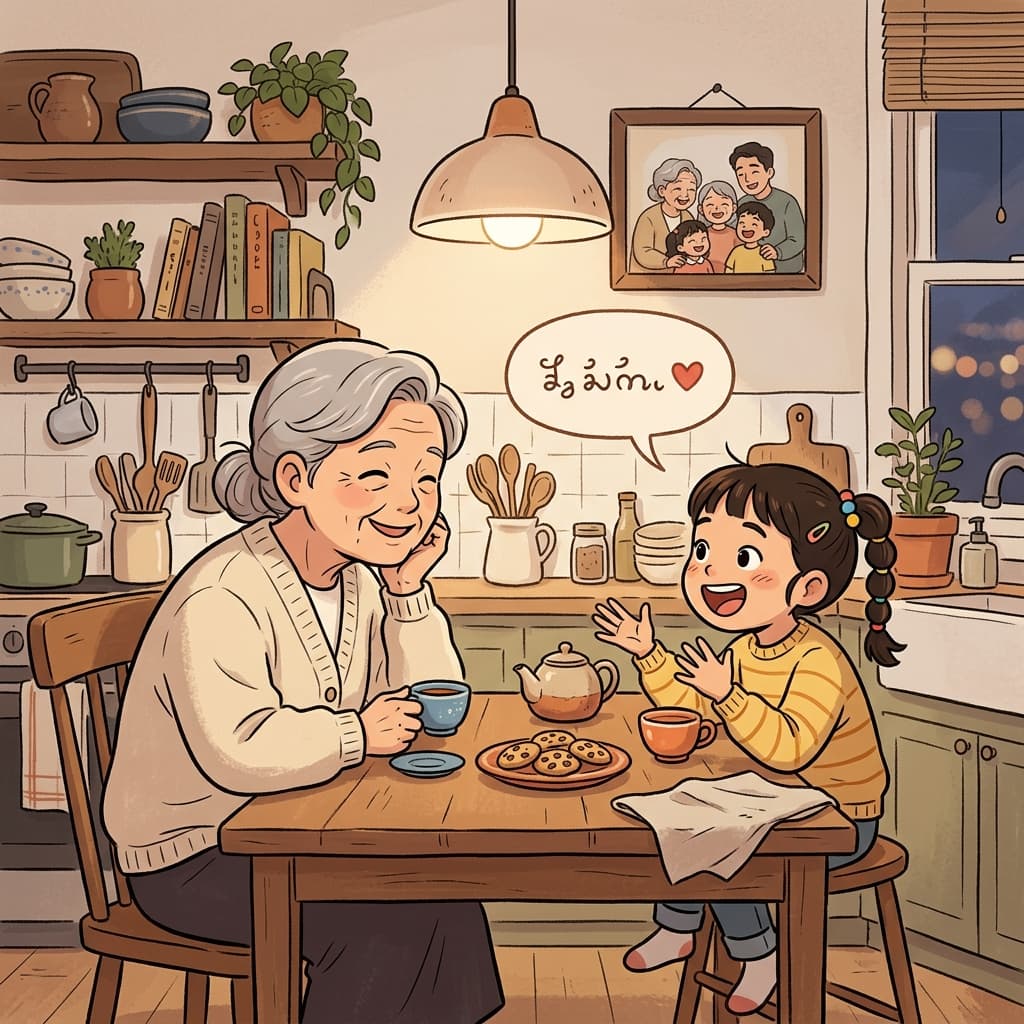
손녀가 할머니랑 모국어로 조잘조잘 이야기한다.
🎤발음
🌳어원 분석
'tongue'은 실제 신체 부위인 '혀'를 의미하지만, 비유적으로 '언어'를 뜻하는 단어로 자주 쓰입니다 (예: native tongue, foreign tongue).
기원
이 표현은 중세 라틴어 'lingua materna(어머니의 언어)'에서 유래했습니다. 옛날에는 아버지가 학교에서 라틴어(공식 언어)를 가르쳤지만, 집에서 어머니가 아이에게 처음 말을 가르쳤기 때문에 '어머니의 혀/언어'라는 표현이 생겼습니다. 즉, 가정에서 자연스럽게 습득한 첫 언어를 의미하게 되었습니다.
형태소 분해
mother(어머니) + tongue(혀→언어)
진화 과정
이 표현은 중세 라틴어 'lingua materna(어머니의 언어)'에서 유래했습니다. 옛날에는 아버지가 학교에서 라틴어(공식 언어)를 가르쳤지만, 집에서 어머니가 아이에게 처음 말을 가르쳤기 때문에 '어머니의 혀/언어'라는 표현이 생겼습니다. 즉, 가정에서 자연스럽게 습득한 첫 언어를 의미하게 되었습니다.
💡창의적 암기법
AI Generated Mnemonic
'mother tongue [마더 텅]'을 발음 그대로 읽으면 '엄마의 혀(tongue)'라는 뜻이 그대로 느껴집니다. 아기가 태어나서 처음 '엄마'라는 말을 배울 때, 엄마의 혀(tongue)가 움직이는 모습을 보고 따라 하며 말을 배우는 장면을 상상해보세요. 엄마가 '마~더~' 하고 혀를 굴리며 아기에게 말을 가르치는 모습! 그래서 '엄마의 혀 = 태어나서 처음 배운 언어 = 모국어'가 됩니다.
💡 엄마(mother)의 혀(tongue) → 엄마가 처음 가르쳐준 말 → 모국어
🎵라이밍 (Rhyme)
'tongue'은 발음이 [텅]으로 'young(영)', 'sung(성)'과 라임이 맞아요. '엄마가 어릴 적(young)부터 노래(sung)로 가르쳐준 언어가 바로 mother tongue!'이라고 연상하면 기억하기 쉽습니다.
'tongue'은 발음이 [텅]으로 'young(영)', 'sung(성)'과 라임이 맞아요. '엄마가 어릴 적(young)부터 노래(sung)로 가르쳐준 언어가 바로 mother tongue!'이라고 연상하면 기억하기 쉽습니다.
'tongue'은 발음이 [텅]으로 'young(영)', 'sung(성)'과 라임이 맞아요. '엄마가 어릴 적(young)부터 노래(sung)로 가르쳐준 언어가 바로 mother tongue!'이라고 연상하면 기억하기 쉽습니다.
'tongue'은 발음이 [텅]으로 'young(영)', 'sung(성)'과 라임이 맞아요. '엄마가 어릴 적(young)부터 노래(sung)로 가르쳐준 언어가 바로 mother tongue!'이라고 연상하면 기억하기 쉽습니다.
🔗연어 (Collocation)
모국어로 말하다
모국어를 배우다
모국어 교육
모국어로 번역하다
모국어를 잃다
모국어 화자
모국어로 생각하다
📝예문
“Even after living in the US for 20 years, he still counts numbers in his mother tongue when he's nervous.”
미국에서 20년을 살았어도, 그는 긴장하면 여전히 모국어로 숫자를 센다.
“Public officials should be able to communicate policies clearly in citizens' mother tongue.”
공무원은 시민들의 모국어로 정책을 명확하게 전달할 수 있어야 한다.
“My grandmother's mother tongue was a regional dialect that almost no young people speak anymore.”
할머니의 모국어는 이제 젊은 사람들이 거의 쓰지 않는 지역 방언이었다.
“He dreams in his mother tongue, but he complains in English—apparently that's more satisfying.”
그는 모국어로 꿈을 꾸지만, 불평은 영어로 한다—그게 더 시원한가 보다.