bland (블랜드) — lacking strong features or characteristics; uninteresting
Part of speech: ADJECTIVE
Definition: lacking strong features or characteristics; uninteresting
Pronunciation (IPA): /blænd/
Korean meaning: 특색이 없는, 재미없는, 밋밋한
Korean pronunciation: 블랜드
Example Sentences
- My roommate's cooking is so bland that even salt runs away from it.
- The hospital serves bland meals to help patients recover.
- His bland smile couldn't hide his disappointment.
bland
ADJECTIVE[/blænd/]
블랜드
lacking strong features or characteristics; uninteresting
특색이 없는, 재미없는, 밋밋한

국이 너무 싱겁고 밍밍해서 아무 맛도 안 난다.

"Blend it all together!" Putting every colorful fruit into the mixer created a totally bland grey mush.
"전부 다 섞어(블렌드/blend)버려!" 모든 다채로운 과일을 믹서기에 넣자, 완전히 특징 없고 밍밍한(bland) 회색 죽이 되었다.
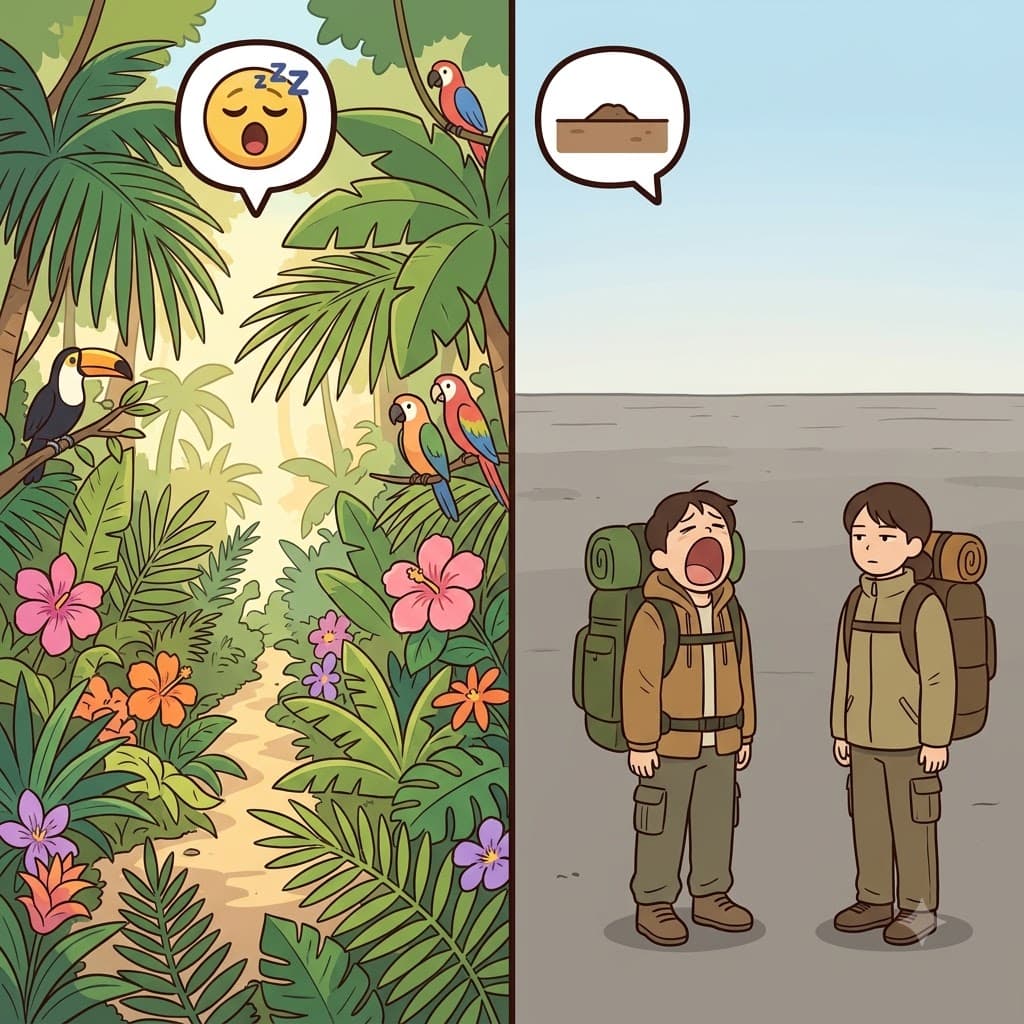
B(boring) + LAND(land) — discovering a completely empty, B(boring) LAND(land), the explorers faced a totally bland scenery.
B(지루한) + LAND(땅) — 완전히 텅 빈 지루한(B) 땅(LAND)을 발견하며, 탐험가들은 완전히 특징 없고 단조로운(bland) 풍경을 마주했다.

Expecting a grand festival, the tourists were deeply disappointed by the incredibly bland street.
웅장하고 화려한(grand) 축제를 기대했지만, 관광객들은 믿을 수 없을 정도로 특징 없고 밋밋한(bland) 거리에 깊이 실망했다.
🎤발음
🌳어원 분석
단순형 형용사로 추가 형태소 없음
기원
라틴어 'blandus'에서 유래되었으며, 원래는 '부드러운, 달콤한'이라는 긍정적 의미였지만 시간이 지나면서 '특색 없는, 밋밋한'이라는 부정적 의미로 변화했습니다.
형태소 분해
blandus (부드러운, 달콤한) → bland
진화 과정
라틴어 'blandus'에서 유래되었으며, 원래는 '부드러운, 달콤한'이라는 긍정적 의미였지만 시간이 지나면서 '특색 없는, 밋밋한'이라는 부정적 의미로 변화했습니다.
💡창의적 암기법
AI Generated Mnemonic
'블랜드'는 '불랜선생'을 연상하세요. 불랜선생은 항상 똑같은 회색 옷을 입고, 똑같은 표정으로 재미없는 수업만 하는 선생님입니다. 학생들이 모두 졸고 있는 모습이 바로 bland의 의미입니다!
💡 블랜드 → 불랜선생 → 재미없고 밋밋함
🎵라이밍 (Rhyme)
-and 발음으로 끝나는 단어들과 함께 암기
-and 발음으로 끝나는 단어들과 함께 암기
-and 발음으로 끝나는 단어들과 함께 암기
-and 발음으로 끝나는 단어들과 함께 암기
🔗연어 (Collocation)
밋밋한 맛
맛없는 음식
재미없는 성격
자극적이지 않은 식단
무표정한 표현
재미없는 대화
📝예문
“My roommate's cooking is so bland that even salt runs away from it.”
내 룸메이트 요리는 너무 맛이 없어서 소금조차 도망간다.
“The hospital serves bland meals to help patients recover.”
병원은 환자들의 회복을 돕기 위해 자극적이지 않은 식사를 제공한다.
“His bland smile couldn't hide his disappointment.”
그의 무표정한 미소는 실망감을 숨길 수 없었다.
“The comedian's jokes were so bland that the audience started checking their phones.”
그 코미디언의 농담은 너무 재미없어서 관객들이 핸드폰을 들여다보기 시작했다.