sadly (새드-리) — In a way that shows sorrow or regret; unfortunately or disappointingly. Used to express that something is unfortunate or causes sadness.
Part of speech: ADVERB
Definition: In a way that shows sorrow or regret; unfortunately or disappointingly. Used to express that something is unfortunate or causes sadness.
Pronunciation (IPA): /ˈsædli/
Korean meaning: 슬프게, 유감스럽게도
Korean pronunciation: 새드-리
Example Sentences
- Sadly, my pizza fell cheese-side down on the floor.
- The dog looked sadly at the empty food bowl.
- Sadly, he realized he had been wearing his shirt inside out all day.
sadly
ADVERB[/ˈsædli/]
새드-리
In a way that shows sorrow or regret; unfortunately or disappointingly. Used to express that something is unfortunate or causes sadness.
슬프게, 유감스럽게도
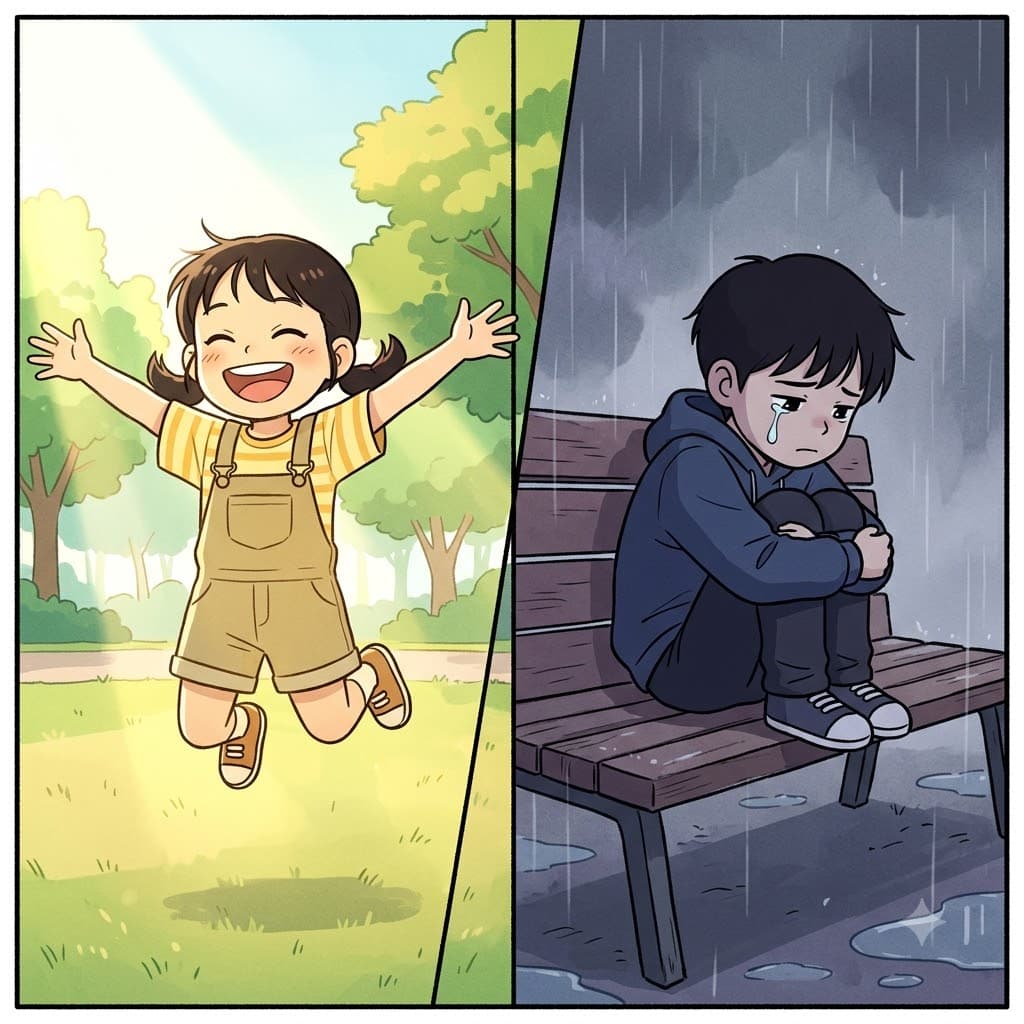
외로운 소년은 비 오는 공원 벤치에 앉아 슬프게(sadly) 눈물을 닦았다.
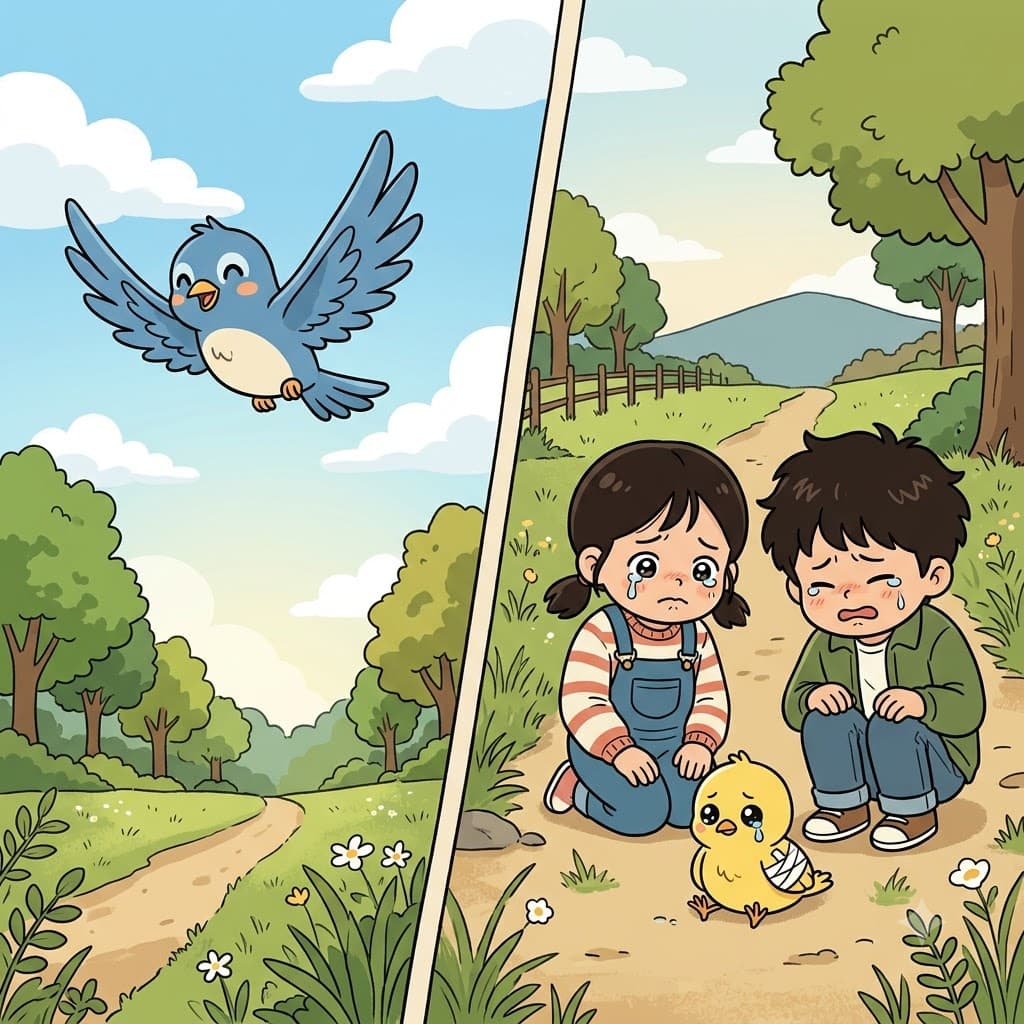
The children sadly looked down at the injured little bird on the ground.
아이들은 바닥에 쓰러진 다친 작은 새를 슬프게(sadly) 바라보았다.
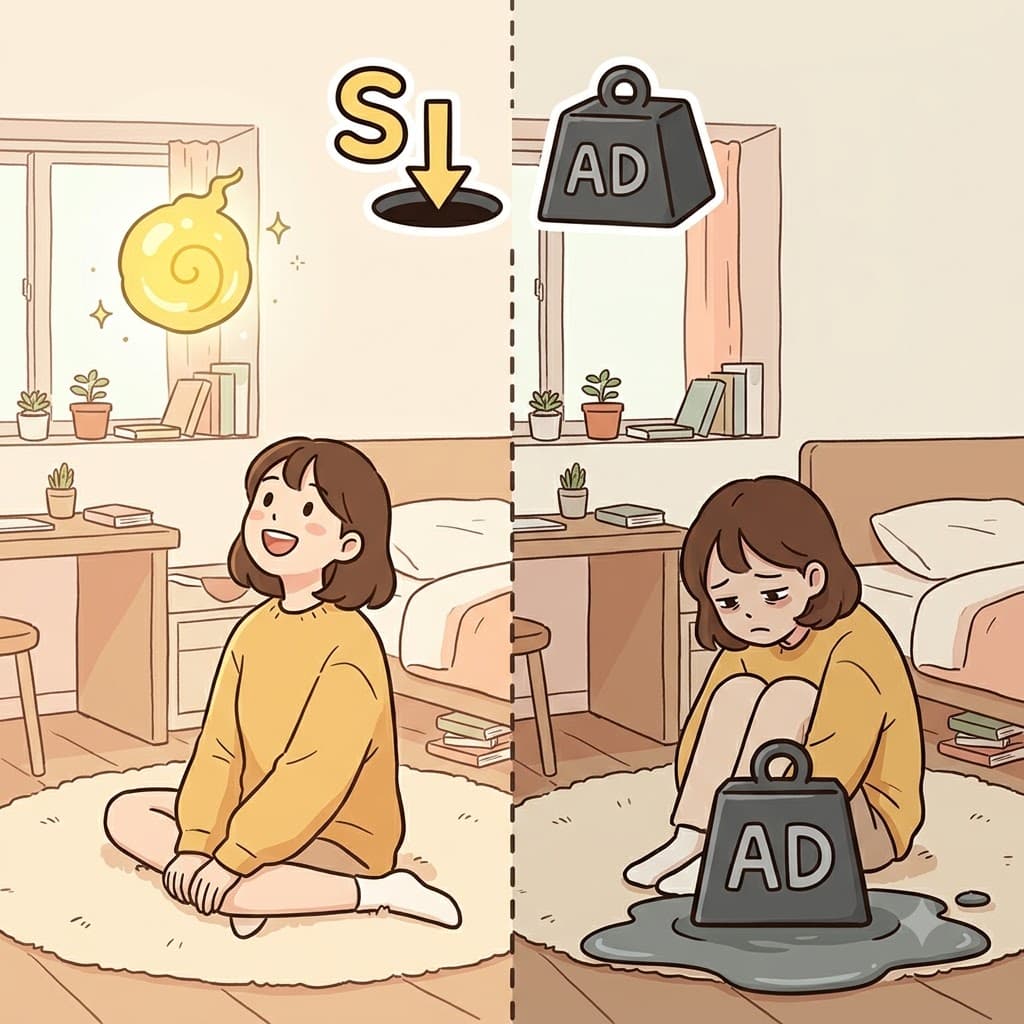
As her spirit sank, the girl sadly lowered her head and sat in silence.
기분이 가라앉자 소녀는 슬프게(sadly) 고개를 숙이고 조용히 앉아 있었다.
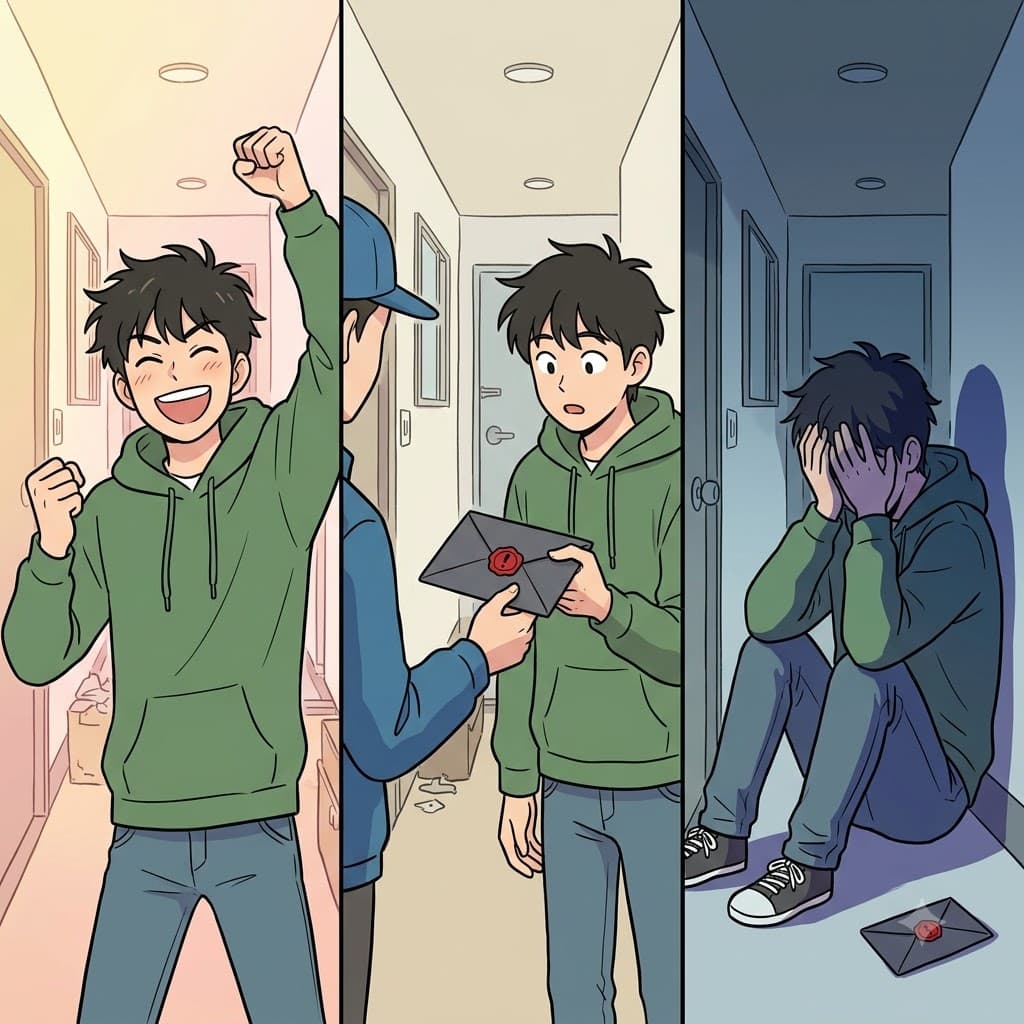
He was glad at first, but after hearing the bad news, he sadly covered his face.
그는 처음에는 기뻐했지만(glad), 나쁜(bad) 소식을 듣고 슬프게(sadly) 얼굴을 감쌌다.
🎤발음
🌳어원 분석
sad(슬픈) + -ly(부사) = 슬프게, 유감스럽게도
기원
고대 영어 'sæd(무거운, 진지한)'에서 유래되어 현재의 '슬픈'이라는 의미로 변화했습니다. 원래는 '배부른, 만족한'이라는 긍정적 의미였지만 시간이 지나면서 '무거운 마음'이라는 의미로 발전했어요.
형태소 분해
sad (슬픈) + -ly (부사 접미사)
진화 과정
고대 영어 'sæd(무거운, 진지한)'에서 유래되어 현재의 '슬픈'이라는 의미로 변화했습니다. 원래는 '배부른, 만족한'이라는 긍정적 의미였지만 시간이 지나면서 '무거운 마음'이라는 의미로 발전했어요.
💡창의적 암기법
AI Generated Mnemonic
'새들리'라고 발음하는데, '새들이 슬프게 울고 있다'는 장면을 상상해보세요. 새들이 슬픈 소리로 지저귀는 모습이 sadly(슬프게)의 의미와 완벽하게 연결됩니다.
💡 새들이 → 슬프게
🎵라이밍 (Rhyme)
📝예문
“Sadly, my pizza fell cheese-side down on the floor.”
슬프게도, 내 피자가 치즈 면이 바닥에 닿게 떨어졌다.
“The dog looked sadly at the empty food bowl.”
개는 빈 밥그릇을 슬프게 바라봤다.
“Sadly, he realized he had been wearing his shirt inside out all day.”
슬프게도, 그는 하루 종일 셔츠를 뒤집어 입고 다녔다는 것을 깨달았다.
“She waved sadly as the train departed.”
그녀는 기차가 떠날 때 슬프게 손을 흔들었다.