stigma (스티그마) — a mark of disgrace associated with a particular circumstance, quality, or person
Part of speech: NOUN
Definition: a mark of disgrace associated with a particular circumstance, quality, or person
Pronunciation (IPA): /ˈstɪɡmə/
Korean meaning: 낙인, 오명, 치욕의 표시
Korean pronunciation: 스티그마
Example Sentences
- He worried that wearing socks with sandals would carry a fashion stigma forever.
- The company worked hard to remove the stigma associated with their previous product failure.
- She decided to openly discuss her struggles to help reduce the stigma around depression.
stigma
NOUN[/ˈstɪɡmə/]
스티그마
a mark of disgrace associated with a particular circumstance, quality, or person
낙인, 오명, 치욕의 표시

정신 질환에 대한 낙인 때문에 그는 오랫동안 입을 다물었다.

"Stop with the sticker!" Desperately refusing the shameful label, the innocent man tried to avoid the permanent stigma.
"스티(sti)커 그(g)만(ma)!" 불명예스러운 꼬리표를 필사적으로 거부하며, 결백한 남자는 영구적인 오명(stigma)을 피하려 했다.
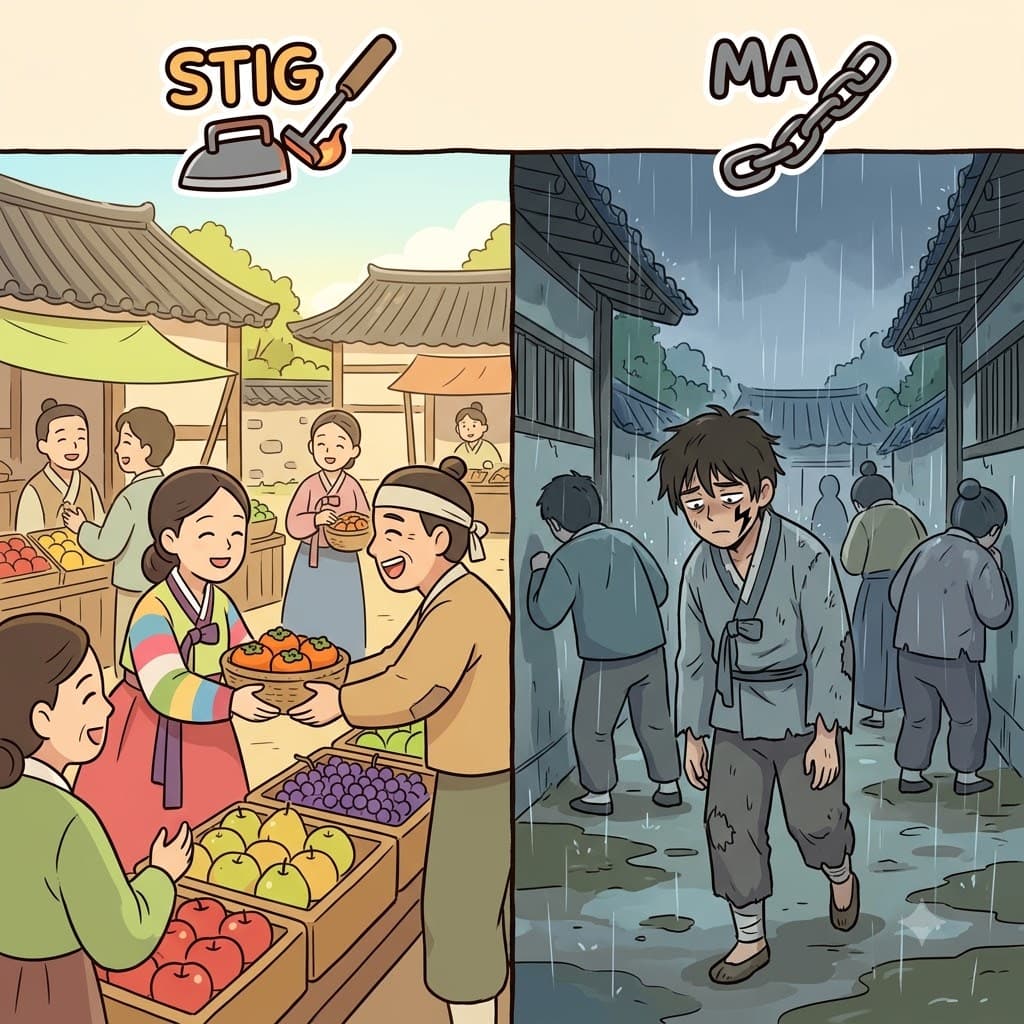
STIG(mark) + MA(result) — forced to wear the permanent STIG(mark) of a thief as a harsh result(MA), the outcast lived with a heavy stigma.
STIG(표식) + MA(결과) — 도둑이라는 영구적인 표식(STIG)을 가혹한 결과(MA)로 달고 살아야 했던 추방자는 무거운 낙인(stigma)을 안고 살았다.

Why the honest hero suddenly received such a cruel stigma remained a complete, unsolved enigma.
정직한 영웅이 왜 갑자기 그토록 잔인한 오명(stigma)을 썼는지는 완전히 풀리지 않은 수수께끼(enigma)로 남았다.
🎤발음
🌳어원 분석
단순형태로 접두사나 접미사 없음
기원
고대 그리스에서 노예나 죄인의 몸에 뜨거운 철로 찍던 표시에서 유래. 스틱(stick)으로 찍듯이 낙인을 찍었다는 연상이 가능하다.
형태소 분해
stigma (찍힌 표시, 상처) ← stizein (찌르다, 표시하다)
진화 과정
고대 그리스에서 노예나 죄인의 몸에 뜨거운 철로 찍던 표시에서 유래. 스틱(stick)으로 찍듯이 낙인을 찍었다는 연상이 가능하다.
💡창의적 암기법
AI Generated Mnemonic
'스티그마'는 '스티커 구마(악마)'로 연상. 악마가 스티커처럼 달라붙는 낙인을 찍어놓는 모습을 상상해보자.
💡 스티커 구마 → 달라붙는 낙인
🎵라이밍 (Rhyme)
-gma로 끝나는 단어들과 함께 기억하기
-gma로 끝나는 단어들과 함께 기억하기
🔗연어 (Collocation)
사회적 낙인
낙인을 찍다
낙인을 없애다
낙인을 갖다
낙인을 극복하다
정신건강 낙인
📝예문
“He worried that wearing socks with sandals would carry a fashion stigma forever.”
그는 샌들에 양말을 신는 것이 영원히 패션 낙인이 될까 봐 걱정했다.
“The company worked hard to remove the stigma associated with their previous product failure.”
회사는 이전 제품 실패와 관련된 오명을 벗기 위해 열심히 노력했다.
“She decided to openly discuss her struggles to help reduce the stigma around depression.”
그녀는 우울증에 대한 낙인을 줄이는 데 도움이 되고자 자신의 고민을 공개적으로 이야기하기로 했다.
“There's an unfair stigma that all teenagers are lazy and irresponsible.”
모든 십대가 게으르고 무책임하다는 부당한 편견이 있다.