caustic (코스틱) — able to burn or corrode organic tissue by chemical action
Part of speech: ADJECTIVE
Definition: able to burn or corrode organic tissue by chemical action
Pronunciation (IPA): /ˈkɔːstɪk/
Korean meaning: 부식성의, 화학적으로 조직을 태우거나 부식시키는
Korean pronunciation: 코스틱
Example Sentences
- The chef accidentally spilled caustic cleaner and yelled 'That's more corrosive than my mother-in-law's cooking advice!'
- Her caustic review of the restaurant was so brutal that the chef considered changing careers to become a food critic instead.
- The laboratory requires proper ventilation when working with caustic materials.
caustic
ADJECTIVE[/ˈkɔːstɪk/]
코스틱
able to burn or corrode organic tissue by chemical action
부식성의, 화학적으로 조직을 태우거나 부식시키는

그의 신랄한 한마디에 식탁 분위기가 싸늘해졌다.
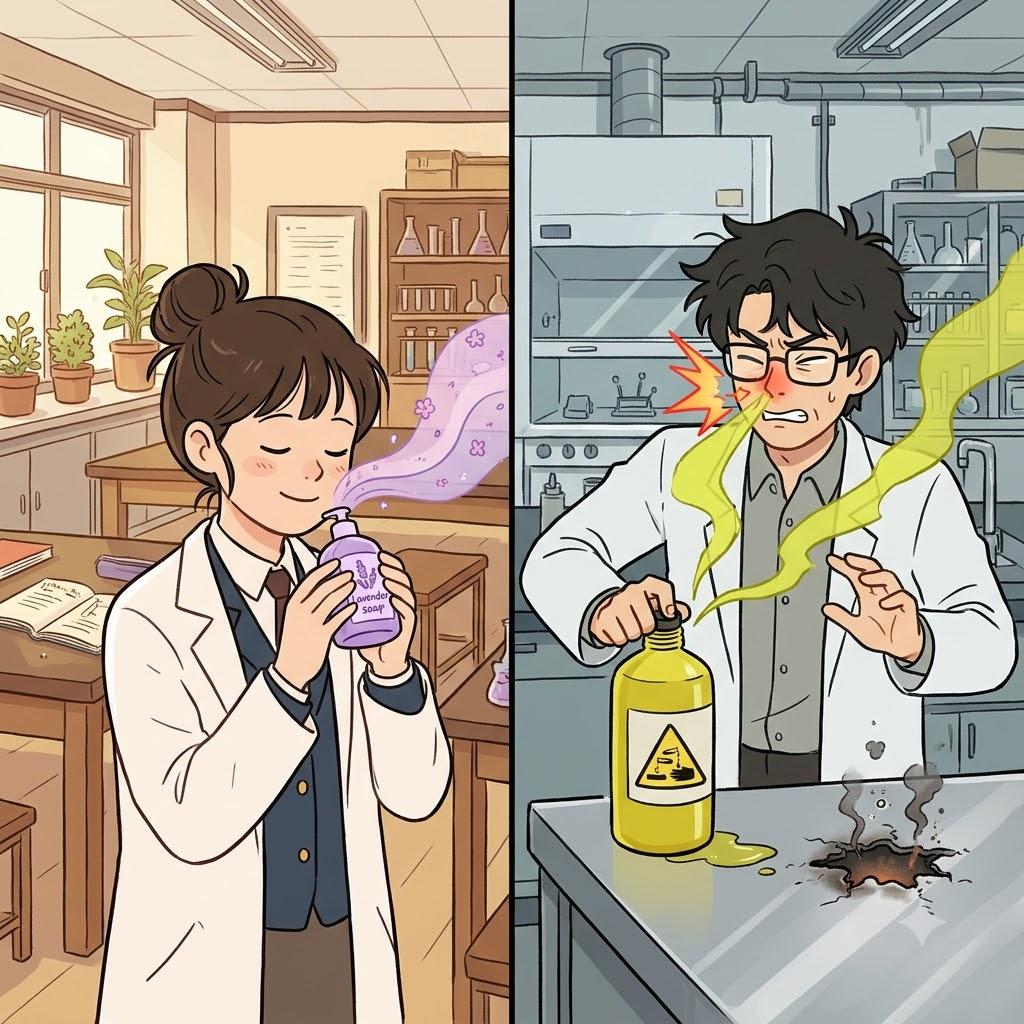
"The chemical fumes were so strong that his nose stung with a sharp tick!" The chemist wore a mask to handle the caustic cleaner.
"화학 연기가 너무 독해서 코(caus)가 틱(tic) 하고 쏘듯 따갑네!" 화학자는 그 부식성의(독한)(caustic) 세척제를 다루기 위해 마스크를 착용했다.

CAUST (from Greek kaustos, burning, like HOLOCAUST and CAUTERIZE) + IC (having the power of) — because the strong lye had the CAUST-IC power to burn through solid wood, the carpenter wore thick rubber gloves.
CAUST (불로 태우다·지지다를 뜻하는 그리스어 kaustos, 홀로코스트[holocaust]·소작하다[cauterize]의 어근) + IC (~의 성질을 가진) — 강력한 양잿물은 단단한 나무까지 태워 녹이는 부식성의(태우는)(caustic) 힘을 가졌기 때문에, 목수는 두꺼운 고무장갑을 꼈다.

Already exhausted after baking a frosted wedding cake all night, the young chef Quit on the spot when the critic made a caustic joke about her design.
밤새 설탕 옷을 입힌(frosted) 웨딩 케이크를 굽느라 이미 기진맥진했던(exhausted) 젊은 요리사는, 비평가가 자신의 디자인에 대해 신랄한(독설적인)(caustic) 농담을 던지자 그 자리에서 그만두었다.
🎤발음
🌳어원 분석
그리스어 어근 caust(태우다)에 형용사 접미사 -ic가 결합
기원
그리스어 'kaustikos'에서 유래되었으며, 이는 'kaiein(태우다)'에서 파생되었습니다. 마치 불로 태우듯 조직을 파괴하거나 말로 상처를 주는 의미를 담고 있습니다.
형태소 분해
kaustikos (태우는) ← kaiein (태우다)
진화 과정
그리스어 'kaustikos'에서 유래되었으며, 이는 'kaiein(태우다)'에서 파생되었습니다. 마치 불로 태우듯 조직을 파괴하거나 말로 상처를 주는 의미를 담고 있습니다.
💡창의적 암기법
AI Generated Mnemonic
'코스틱'을 '코 스치면 틱틱 아프다'로 연상하세요. 부식성 물질이 코에 스치면 틱틱 쓰리고 아픈 것처럼, 독설도 마음을 아프게 만듭니다.
💡 코스틱 = 코 스치면 틱틱 (아프다)
🎵라이밍 (Rhyme)
-astic 음성으로 끝나는 단어들과 함께 암기하면 도움됨
-astic 음성으로 끝나는 단어들과 함께 암기하면 도움됨
-astic 음성으로 끝나는 단어들과 함께 암기하면 도움됨
🔗연어 (Collocation)
가성소다
독설적인 발언
신랄한 재치
통렬한 비판
부식성 화학물질
독설적인 유머
📝예문
“The chef accidentally spilled caustic cleaner and yelled 'That's more corrosive than my mother-in-law's cooking advice!'”
요리사가 실수로 부식성 세정제를 쏟고는 '이거 우리 장모님 요리 조언보다 더 독하네!'라고 외쳤다.
“Her caustic review of the restaurant was so brutal that the chef considered changing careers to become a food critic instead.”
그녀의 신랄한 식당 리뷰가 너무 잔인해서 그 요리사는 차라리 음식 평론가로 전업하는 것을 고려했다.
“The laboratory requires proper ventilation when working with caustic materials.”
실험실에서는 부식성 물질을 다룰 때 적절한 환기가 필요하다.
“His caustic remarks during the meeting left several colleagues speechless.”
회의 중 그의 독설적인 발언이 여러 동료들을 말문이 막히게 만들었다.